
Necesito un proveedor confiable de etiquetas RFID para proyectos de seguimiento logístico.

Necesitas etiquetas RFID fiables para que tu logística funcione correctamente. Al elegir etiquetas RFID fiables, obtienes mucho más que herramientas. También obtienes un mayor control sobre tus productos y menores riesgos. Las etiquetas RFID fiables te ayudan a controlar el inventario y a visualizar tu cadena de suministro en tiempo real . Además, facilitan el seguimiento de los contenedores. Estas ventajas te ayudan a evitar la falta de existencias, a detectar problemas rápidamente y a prevenir pérdidas. Las etiquetas RFID fiables optimizan tu logística y mejoran la gestión de tus activos. Elige siempre etiquetas RFID fiables con buenas características y un proveedor de confianza para obtener los mejores resultados.
Conclusiones clave
Las etiquetas RFID fiables ayudan a que la logística funcione mejor, permitiéndole rastrear artículos de inmediato, reducir pérdidas y agilizar las entregas. El uso de buenas etiquetas RFID disminuye problemas como errores de conteo y fallos del sistema, lo que le ahorra dinero a largo plazo. Elija etiquetas RFID que cumplan con las normas del sector y cuenten con las certificaciones adecuadas para mantener su cadena de suministro segura y fiable. Opte por etiquetas RFID diseñadas para entornos exigentes , que funcionen incluso en condiciones climáticas extremas (calor, frío o humedad). Asegúrese de que las etiquetas RFID sean compatibles con sus sistemas actuales para evitar problemas que puedan interrumpir su logística. Lea las opiniones de otros clientes y verifique la experiencia del proveedor para encontrar proveedores de etiquetas RFID de confianza que satisfagan sus necesidades. Comprar varias etiquetas RFID a la vez puede ayudarle a ahorrar dinero y obtener mejores precios, lo que facilita la gestión de su presupuesto logístico. Probar las etiquetas RFID en situaciones reales le permite detectar problemas a tiempo, para que pueda utilizarlas sin problemas en el seguimiento logístico.
¿Por qué son importantes las etiquetas RFID fiables?
Impacto en la eficiencia logística
Las etiquetas RFID confiables ayudan a que su logística funcione mejor. Las etiquetas RFID le permiten ver sus artículos en tiempo real. Siempre sabrá dónde están sus activos. Esto ayuda a prevenir pérdidas y errores. También ayuda a prevenir robos y entregas incorrectas. Las etiquetas RFID facilitan el trabajo en el almacén. Ayudan con la selección, el empaque y el conteo de artículos. Puede entregar más rápido y usar menos combustible. Un mejor seguimiento ayuda a planificar buenas rutas. Usted ahorra tanto tiempo como dinero. Las etiquetas RFID hacen que las entregas sean un 23.5% más rápidas . Reducen los costos de transporte en un 18.2%. Su trabajo de logística mejora un 21.8%. La rotación del almacén aumenta un 19.4%. Tiene más control sobre su cadena de suministro y activos.
Consejo: Utilice etiquetas RFID para visualizar claramente su cadena de suministro y optimizar su logística.
Riesgos de las etiquetas RFID poco fiables
Bad RFID tags can cause problems in your logistics. Very hot or wet places can make RFID tags not work well. Metal can block RFID tags from being read right. You need to pick the right RFID tags for your place. If you put tags in the wrong spot or set up readers wrong, they may not work. Metal and liquids can mess up RFID tags. If you choose the wrong RFID tags, your system might not work. You will pay more for fixing and replacing things. Your logistics will not run as well. Inventory mistakes will happen more. Big inventory errors cost more money. Some stores lost less when RFID tags worked better. You need RFID tags that work everywhere to keep your supply chain safe.
Common risks with unreliable RFID tags:
More money spent on repairs
Less work gets done
More mistakes in inventory
Higher costs to run things
Systems can break
Cost and Productivity Implications
Good RFID tags help you save money and work faster. You avoid big mistakes in your logistics. You track and count things better. RFID tags cut costs by stopping errors and making things run smoother. You do not spend as much on repairs. You can see your supply chain better. Managing assets is easier. You lose less and have less shrinkage. RFID tags help you manage your supply chain with real-time data. You can make better choices. Your logistics keep running well. You get more from your RFID investment.
Note: Buying good RFID tags helps you work better and manage your supply chain well.
Choosing a Dependable RFID Tags Supplier
Product Quality and Certifications
Industry Standards
You want RFID tags that follow the best rules. When tags meet industry standards, your supply chain is safer. This helps your logistics work better. Good suppliers make sure their tags have the right certifications. These certifications mean the tags are safe and legal. They also show the tags can be used around the world.
Here is a table of the most important certifications for RFID tags in logistics:
Certification Type | Importance |
|---|---|
FCC Certification | Needed to follow U.S. laws and local rules. |
CE Mark | Shows the tag is safe and trusted in Europe. |
GDPR Compliance | Keeps data safe and helps you avoid fines. |
Always look for these marks before you buy RFID tags. They help you avoid trouble and keep your tracking strong.
Quality Assurance
Quality is important in your supply chain. You need RFID tags that pass tough tests. The best suppliers use outside labs to check their tags. These tests show the tags work well and last a long time.
Here is a table showing how suppliers prove quality:
Certification Body | Certification Type | Significance |
|---|---|---|
OmniAir Consortium | Independent | Checks if RFID tags are safe and work with other systems. |
Neology | OmniAir Certified | Shows the supplier cares about quality and follows rules. |
When you see these certifications, you know you can trust the RFID tags for your logistics and tracking needs.
Durabilidad y resistencia ambiental
Rendimiento en condiciones adversas
Tu cadena de suministro puede ser exigente para las etiquetas RFID. Necesitas etiquetas que funcionen en ambientes cálidos, fríos o húmedos. Las buenas etiquetas siguen funcionando incluso con cambios climáticos, lo que garantiza el buen funcionamiento de tu sistema de seguimiento.
Aquí hay una tabla que muestra qué hace que las etiquetas RFID sean resistentes en condiciones adversas:
Característica | Descripción |
|---|---|
Rango de temperatura | Los lectores RFID funcionan en un rango de temperatura de -40 °F a 185 °F. |
Materiales de construcción | Las carcasas de aluminio o policarbonato evitan los daños causados por el calor o el frío. |
Electrónica sellada | Su revestimiento especial evita la entrada de agua y polvo. |
Rendimiento de la batería | Las baterías calefactadas funcionan mejor en climas fríos. |
Sintonización de antenas | Los lectores se adaptan para seguir leyendo las etiquetas en lugares fríos. |
Prevención de apagado térmico | Los lectores se apagan si se calientan demasiado y se vuelven a encender cuando se enfrían. |
Aplicaciones en el mundo real | Se utiliza en cámaras frigoríficas a -22 °F y cerca de hornos calientes. |
Necesitas etiquetas RFID que puedan soportar cualquier trabajo duro. Esto mantiene tu cadena de suministro en marcha y tu sistema de seguimiento es preciso.
Calidad del material
Los buenos materiales contribuyen a que las etiquetas RFID duren más. Los principales proveedores utilizan materiales resistentes como el aluminio o el policarbonato. Estos materiales protegen las etiquetas de roturas y, además, les permiten funcionar durante más tiempo en entornos difíciles.
Algunos proveedores fabrican etiquetas RFID especiales para diferentes usos. Smartrac fabrica etiquetas para animales y fábricas. GAO RFID ofrece etiquetas para el seguimiento de objetos en lugares de difícil acceso. Algunas empresas fabrican etiquetas personalizadas para trabajos exigentes. Tenga en cuenta estas características al elegir sus etiquetas RFID.
Compatibilidad e integración
Integración de sistemas
Sus etiquetas RFID deben ser compatibles con sus sistemas actuales. De lo contrario, su cadena de suministro podría ralentizarse. En ocasiones, los sistemas RFID no son compatibles con su software o bases de datos, lo que puede ocasionar retrasos y errores.
Para solucionar estos problemas, usted debería:
Comprueba si las etiquetas RFID son compatibles con tu software y hardware.
Seleccione proveedores que ayuden con la integración.
Si necesita ayuda, póngase en contacto con expertos.
Proveedores líderes como Zebra, Avery Dennison, Impinj y Honeywell fabrican etiquetas RFID compatibles con la mayoría del software de logística. Estas etiquetas le brindan herramientas para rastrear artículos en tiempo real, lo que optimiza su cadena de suministro y agiliza su logística.
Soporte de frecuencia
Las etiquetas RFID utilizan diferentes frecuencias. Debes elegir etiquetas compatibles con tus lectores. Si utilizas una frecuencia incorrecta, tu sistema podría no funcionar correctamente. Comprueba siempre la frecuencia y el protocolo antes de comprar etiquetas nuevas.
Aquí tienes algunos consejos para el soporte de frecuencia:
Asegúrese de que sus etiquetas RFID y lectores utilicen la misma frecuencia.
No mezcle etiquetas de diferentes sistemas a menos que lo verifique primero.
Seleccione etiquetas que sean compatibles con los protocolos de su cadena de suministro.
Si haces esto, tu sistema RFID funcionará correctamente. Podrás rastrear mejor las cosas y tendrás menos problemas.
Consejo: Pruebe siempre algunas etiquetas RFID en su cadena de suministro real antes de comprar un lote grande. Esto le ayudará a detectar cualquier problema de integración o compatibilidad con antelación.
Reputación del proveedor
Opiniones de los clientes
Antes de comprar etiquetas RFID, debes confiar en tu proveedor. Leer las opiniones de otros clientes te ayudará a saber si el proveedor es honesto. Otros compradores comparten su experiencia sobre la eficacia de las etiquetas RFID para el seguimiento. Puedes informarte sobre el servicio del proveedor y la rapidez de la entrega. Además, podrás comprobar la calidad de las etiquetas RFID.
Las opiniones de los clientes te indican si las etiquetas RFID funcionan correctamente.
Puedes ver si la gente tiene los mismos problemas o elogios.
Las reseñas te ayudan a evitar malos proveedores.
Los estudios de caso muestran cómo los proveedores solucionan problemas reales de seguimiento.
Puedes comprobar si las etiquetas RFID funcionan en tu negocio.
Al leer reseñas y estudios de caso, puedes ver en qué destaca el proveedor. Esto te ayuda a tomar decisiones acertadas para tus necesidades de seguimiento.
Experiencia en el sector
Un proveedor con amplia experiencia sabe cómo resolver problemas complejos. Necesitas un socio que comprenda tus necesidades de seguimiento. Pueden ofrecerte soluciones eficaces. Los proveedores experimentados han colaborado en numerosos proyectos logísticos y conocen las mejores maneras de rastrear activos y contenedores.
Busca proveedores que hayan trabajado con grandes empresas o en tu sector. Ellos pueden enseñarte qué funciona mejor y ayudarte a evitar errores. Su experiencia te permitirá configurar tu sistema RFID más rápidamente. Te sentirás más tranquilo sabiendo que tu proveedor ya tiene experiencia en este campo.
Soporte técnico y personalización
Servicios de apoyo
Para tu proyecto necesitas más que simples etiquetas RFID. Necesitas un proveedor que te ayude cuando lo necesites. Un buen soporte te ayuda a elegir las etiquetas RFID adecuadas. Recibes asistencia para la configuración y la solución de problemas.
Los proveedores le asesorarán sobre la etiqueta RFID más adecuada para usted.
Recibirás ayuda para instalar tu sistema de seguimiento.
Los equipos de soporte responden a tus preguntas rápidamente.
Si tus etiquetas RFID no funcionan correctamente, puedes contar con la ayuda de expertos.
Un buen proveedor te da seguridad. Sabes que puedes obtener ayuda en cualquier momento. Esto garantiza que tu sistema de seguimiento funcione correctamente.
Opciones de etiquetas personalizadas
Cada proyecto es diferente. A veces, se necesitan etiquetas RFID especiales para cada trabajo. Los mejores proveedores ofrecen etiquetas RFID personalizadas según sus necesidades. Puede solicitar etiquetas que funcionen en entornos difíciles o que tengan características especiales.
Tipo de servicio | Descripción |
|---|---|
Etiquetas RFID personalizadas | Etiquetas especiales diseñadas para sus necesidades de seguimiento. |
Personalización de la oficina de servicios | Opciones para marcar y programar etiquetas RFID, incluso para imprimir. |
Soluciones de etiquetado personalizado | Etiquetas únicas para tareas de seguimiento especiales. |
Puedes conseguir etiquetas RFID de diferentes formas y tamaños. Algunos proveedores te permiten imprimir tu propia información en las etiquetas. Otros te ayudan a programarlas para tu sistema. Las etiquetas RFID personalizadas te permiten rastrear artículos en cualquier lugar, como en almacenes o en exteriores.
Consejo: Elija un proveedor que ofrezca un buen soporte y etiquetas RFID personalizadas. Esto le ayudará a obtener los mejores resultados para sus proyectos de seguimiento.
Si buscas una buena solución, prueba la etiqueta activa de 2,4 GHz de MarktraceRFID . Esta etiqueta tiene un amplio alcance de lectura y consume poca energía. Puedes ajustar el alcance según tus necesidades. Funciona en muchos lugares. MarktraceRFID también ofrece soporte y opciones personalizadas para tu proyecto. Con el proveedor adecuado, obtendrás etiquetas RFID de calidad y asistencia en cada etapa de tu proyecto.
Características de las etiquetas RFID para logística
Rango de lectura y precisión
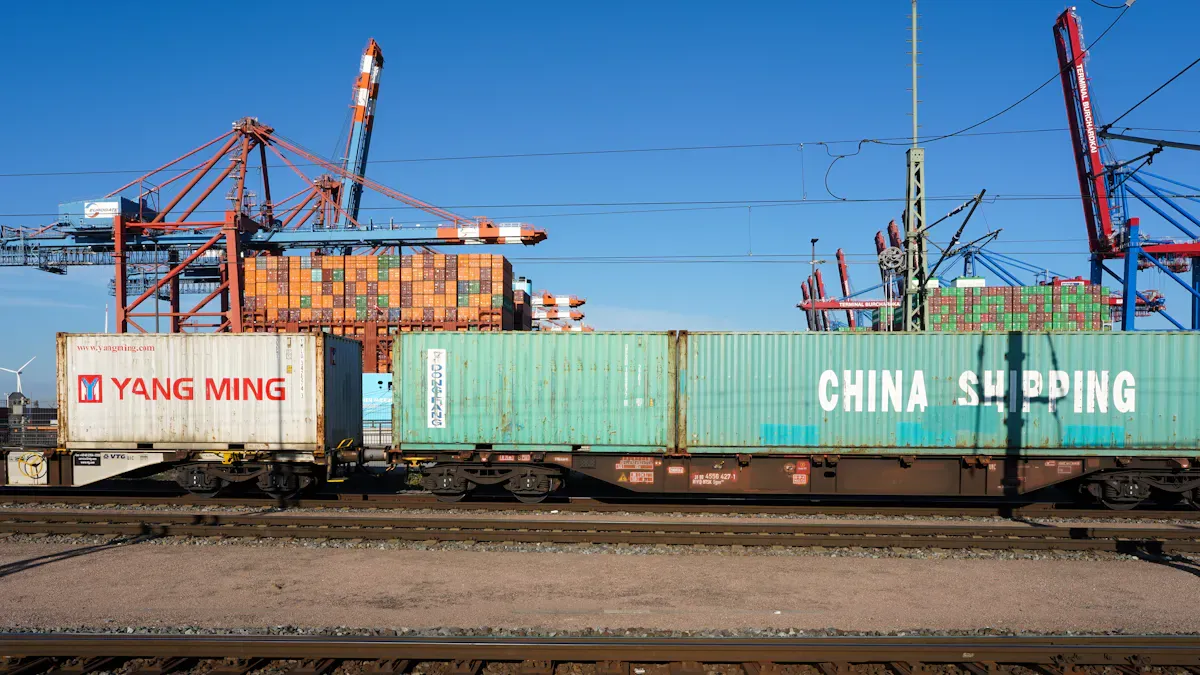
Para elegir etiquetas RFID en logística, es fundamental contar con un buen alcance de lectura y precisión. Estas características permiten rastrear contenedores y activos en la cadena de suministro. Es esencial saber dónde se encuentra cada artículo en todo momento. Esto es crucial para el seguimiento en tiempo real y el seguimiento de contenedores de envío.
Rendimiento constante
Las etiquetas RFID deben proporcionar lecturas precisas en todo momento. Si una etiqueta falla, se pierde el rastro de los contenedores o activos. Esto puede causar graves problemas en la logística. Un rendimiento constante garantiza que siempre sepa dónde están sus contenedores. Así, evitará errores y mantendrá la operación en marcha sin contratiempos.
Aquí se muestra una tabla con los rangos de lectura y la precisión de los diferentes tipos de RFID utilizados en logística y seguimiento de contenedores:
Tipo RFID | Frecuencia | Rango de lectura típico | Rango máximo informado |
|---|---|---|---|
Baja frecuencia (LF) | 125-134 kHz | Hasta 10 cm | 0,5-1,5 m |
Alta frecuencia (HF)/NFC | 13,56 MHz | 4-50 cm, hasta 1 m | 1,5 m |
UHF Pasivo (estándar) | 860-960 MHz | 4-6 metros | 10-30 m |
UHF Pasivo (especializado) | 860-960 MHz | 40 m sobre metal | Más de 90 metros |
RFID activo (con batería) | Varios | 90-100 m | Más de 500 m |
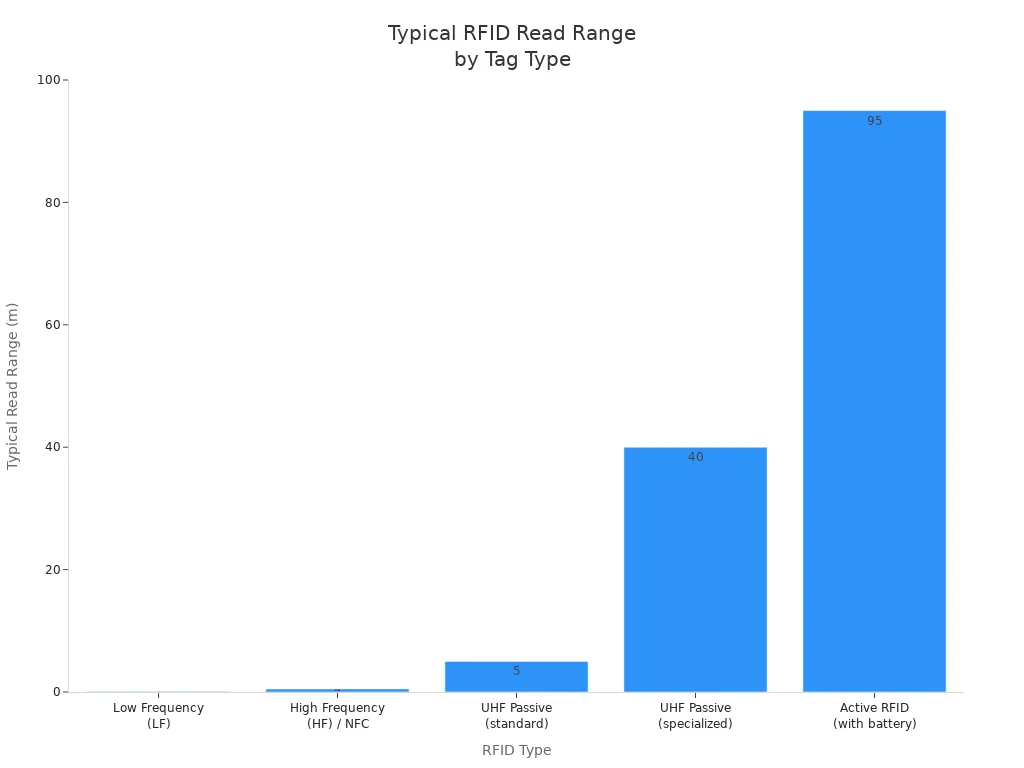
Las etiquetas RFID activas tienen el mayor alcance. Son ideales para el seguimiento de contenedores en grandes depósitos o almacenes. Obtendrá una alta precisión de datos y seguimiento en tiempo real para todos sus contenedores.
Rango ajustable
Necesitas etiquetas RFID flexibles. A veces, querrás rastrear contenedores a gran distancia; otras veces, objetos cercanos. El rango de lectura ajustable te permite configurar la distancia para cada etiqueta RFID. Esto te ayuda a evitar interferencias y a mantener la precisión del seguimiento.
Por ejemplo, la etiqueta activa de 2,4 GHz de MarktraceRFID permite modificar el rango de lectura mediante software. Se puede configurar para seguimiento de corto o largo alcance. Esta función ofrece mayor control y mejora la precisión de los datos.
Consejo: El rango ajustable le permite adaptar su sistema RFID a sus necesidades logísticas. Obtendrá mayor precisión y menos lecturas fallidas.
Resistencia a entornos adversos
La logística puede ser complicada. Se necesitan etiquetas RFID que funcionen en ambientes cálidos, fríos y húmedos. El seguimiento en tiempo real solo funciona si las etiquetas resisten cualquier condición ambiental. Esto es fundamental para el seguimiento de contenedores en patios o puertos al aire libre.
Temperatura y humedad
Las etiquetas RFID deben soportar temperaturas extremas, tanto altas como bajas, y condiciones de humedad. Si dejan de funcionar, se pierde la precisión de los datos y el seguimiento en tiempo real. Necesita etiquetas que sigan funcionando en almacenes con altas temperaturas, cámaras frigoríficas o muelles de carga con lluvia.
Las etiquetas RFID para condiciones extremas siguen funcionando tanto a altas como a bajas temperaturas.
Las etiquetas RFID resistentes a la humedad protegen los componentes electrónicos del interior, lo que permite seguir realizando el seguimiento de los contenedores incluso en lugares húmedos.
En la agricultura y la logística al aire libre, las etiquetas RFID resistentes a la humedad le ayudan a gestionar el inventario y los contenedores sin preocupaciones.
Mantén tus contenedores a la vista y tu sistema de seguimiento preciso, sin importar las condiciones climáticas.
Durabilidad física
La logística implica mucho movimiento. Los contenedores se golpean, se caen o se apilan. Tus etiquetas RFID deben resistir un trato brusco. Las etiquetas duraderas garantizan un alto nivel de seguimiento y precisión de los datos.
Elija etiquetas RFID diseñadas para resistir las inclemencias del tiempo y el calor .
Coloca las etiquetas en lugares seguros para evitar daños.
Utilice carcasas protectoras o material de amortiguación para proteger las etiquetas de los impactos.
Revisa tus etiquetas con frecuencia para detectar problemas a tiempo.
Con las etiquetas RFID adecuadas, podrá realizar el seguimiento de contenedores y activos en cada etapa de la logística. De esta forma, evitará la pérdida de contenedores y mantendrá un seguimiento eficaz en tiempo real.
Seguridad de los datos
Es fundamental proteger sus datos en logística. Las etiquetas RFID contienen información importante sobre contenedores y activos. Si alguien manipula sus etiquetas, corre el riesgo de perder contenedores o de que se filtren datos confidenciales. Las etiquetas RFID seguras garantizan la protección de su sistema de seguimiento y la precisión de sus datos.
Cifrado
Las etiquetas RFID modernas utilizan un cifrado robusto para proteger sus datos. Por ejemplo, algunas etiquetas emplean el cifrado AES-128 bits , lo que garantiza la seguridad del seguimiento de sus contenedores. Cada escaneo genera una URL única y cifrada, impidiendo que los piratas informáticos copien o reutilicen sus datos.
El sistema de detección de manipulación te avisa si alguien intenta abrir o cambiar una etiqueta.
Las URL dinámicas seguras evitan los ataques de repetición y permiten la autenticación en tiempo real.
Las etiquetas a prueba de manipulaciones muestran señales claras si alguien intenta quitarlas o moverlas.
Usted mantiene sus contenedores seguros y sus datos logísticos privados.
Función de seguridad | Descripción |
|---|---|
Detección de manipulación | Indica al instante si la etiqueta ha sido abierta o alterada. |
URL dinámica segura | Cada escaneo genera una URL única y cifrada para la autenticación en tiempo real. |
Cifrado AES de 128 bits | Garantiza que todos los intercambios de datos sean seguros y rastreables. |
A prueba de manipulaciones | Se aprecian señales claras al retirarlo, lo que impide su reutilización o la falsificación de etiquetas. |
Cumplimiento
En logística, es imprescindible cumplir con las leyes de protección de datos. Las etiquetas RFID deben cumplir con normativas como la Ley de Privacidad del Consumidor de California (CCPA) . Esto protege los datos personales y genera confianza con sus clientes.
Regulación | Descripción |
|---|---|
Ley de Privacidad del Consumidor de California (CCPA) | Establece normas estrictas para la recopilación y el uso de datos RFID. Los usuarios controlan su información. |
Medidas de protección de datos | Las empresas deben utilizar medidas de seguridad robustas para evitar fugas de datos. |
Requisitos de transparencia | Debes informar a los usuarios sobre cómo recopilas, utilizas y compartes sus datos. |
Al usar etiquetas RFID que cumplen con estas normas, mantienes tu logística segura y a tus clientes satisfechos. Proteges cada contenedor y activo con una alta precisión de datos y seguimiento en tiempo real.
Nota: Las etiquetas RFID seguras y que cumplen con la normativa le ayudan a evitar multas y a que su logística funcione sin problemas.
Diseño y montaje compactos
Idoneidad de los activos
Necesitas etiquetas RFID que se adapten perfectamente a tus activos. Su diseño compacto lo hace posible. Estas pequeñas etiquetas RFID se adhieren a muchos tipos de artículos, desde equipos informáticos hasta herramientas valiosas. Puedes usarlas en contenedores, palés o incluso en pequeños dispositivos portátiles. Esta flexibilidad significa que no necesitas sistemas de seguimiento diferentes para cada activo. Obtienes una solución que funciona en todas partes.
Una etiqueta RFID compacta no estorba. Mantiene tus activos con un aspecto ordenado y profesional. Puedes colocar estas etiquetas en espacios reducidos o en superficies con espacio limitado. Esto te ayuda a rastrear más artículos sin cambiar la forma en que los almacenas o mueves. La etiqueta activa de 2,4 GHz de MarktraceRFID demuestra cómo una etiqueta RFID pequeña y potente puede satisfacer muchas necesidades. Su diseño delgado es ideal para activos informáticos, instrumentos y artículos valiosos. Obtienes un seguimiento eficaz sin hardware voluminoso.
Ventaja | Descripción |
|---|---|
No se requiere línea de visión. | Puedes leer las etiquetas RFID incluso cuando no las ves. Esto hace que los controles de inventario sean rápidos y sencillos. |
Escanee varias etiquetas simultáneamente. | Puedes leer varias etiquetas RFID a la vez. Esto ahorra tiempo durante las auditorías y los envíos. |
Lecturas de largo alcance para la automatización | Puedes realizar el seguimiento de los activos a distancia. Esto facilita las actualizaciones en tiempo real y el inventario automático. |
Resistente y versátil | Las etiquetas RFID compactas funcionan en entornos difíciles. Se pueden usar tanto en interiores como en exteriores. |
Menor dependencia del comportamiento humano | Los lectores RFID fijos hacen el trabajo. No es necesario escanear cada artículo manualmente. |
Localice activos específicos rápidamente | Puedes encontrar el activo adecuado rápidamente, incluso en un almacén abarrotado. |
Inventario y auditorías más rápidas | Usted procesa los cheques más rápido. Esto mantiene sus registros precisos y reduce las pérdidas. |
Con las etiquetas RFID compactas, obtendrá mayor control y mejores resultados. Podrá rastrear todo, en cualquier lugar, con menos esfuerzo.
Facilidad de instalación
Necesitas etiquetas RFID fáciles de instalar. Su montaje rápido te permite empezar a rastrear activos de inmediato. No perderás tiempo con configuraciones complicadas. La instalación sencilla también reduce el riesgo de errores. Obtendrás lecturas fiables y menos problemas.
Al instalar etiquetas RFID de forma rápida y correcta, su proyecto logístico avanza con mayor rapidez. Evita retrasos y mantiene su cadena de suministro en funcionamiento. Además, la facilidad de instalación le permite ampliar su sistema a medida que su negocio crece. Puede añadir más etiquetas RFID sin ralentizar sus operaciones.
La etiqueta RFID adecuada, como la etiqueta activa MarktraceRFID de 2,4 GHz, ofrece opciones de montaje sencillas. Puede fijarla con adhesivo, tornillos o bridas. Elija la mejor opción para sus activos. Esta flexibilidad le ayuda a evitar interferencias y a mantener un seguimiento preciso.
Consejo: Planifica siempre la ubicación de tus etiquetas RFID antes de empezar. Prueba algunas etiquetas en tu entorno real. Esto te ayudará a detectar cualquier problema a tiempo y garantizará que tu sistema funcione correctamente desde el primer día.
You want rfid tags that combine compact design with easy installation. This gives you a powerful tool for real-time tracking, anti-jamming, and ultra-low power use. You get a system that grows with your needs and keeps your logistics on track.
RFID Supplier Evaluation Steps
Research and Shortlisting
Online Directories
Begin your search by checking online directories. These websites list many rfid suppliers together. You can sort by where they are, what they sell, or what industries they serve. This helps you find suppliers that fit your needs. Look for suppliers with clear product info and good customer ratings. Many directories show certifications and how long the supplier has been in business. This lets you find trustworthy partners quickly.
Peer Recommendations
Talk to people in your industry for advice. Peer recommendations give you real stories about how suppliers work. You learn which suppliers deliver on time and which ones help customers well. Trusted peers share their experiences with rfid tags and tracking solutions. Their feedback helps you avoid mistakes and pick suppliers who know how to work with your systems.
Comparing Offerings
Specs and Features
You should compare rfid tag choices side by side. Focus on the specs and features that matter most for your logistics. Think about tag type, operating frequency, and how well the tags fit your needs. Some tags are better for asset tracking, while others work for cold chain or vehicle management. Always check if the tags work with your current systems.
Tip: Pick tags that make your work faster and more accurate. RFID tags collect data quickly and do not need to touch items. This saves time and cuts down on errors.
Pricing Analysis
Price is important, but value is even more important. Compare prices for each tag type and see what you get for your money. Here is a table to help you understand the main options:
Tag Type | Overview | Use Cases | |
|---|---|---|---|
Passive RFID Tags | $0.05 – $0.50 | Cheapest, no battery, powered by reader’s waves. | Retail inventory tracking, access control, etc. |
Active RFID Tags | $10 – $50 | Battery-powered, long read range, real-time tracking. | Tracking high-value assets, vehicle management. |
Semi-Passive RFID Tags | $1 – $10 | Battery-assisted, combines features of passive and active tags. | Cold chain monitoring, healthcare logistics. |
Buying more tags at once lowers the price per tag. Match the tag type to your needs for the best results.
Vetting Reliability
Certifications
Check each supplier’s certifications. Certifications show the supplier meets industry standards. Look for marks like FCC, CE, or GDPR compliance. These show the supplier cares about safety and quality. Certified suppliers give you peace of mind and help you avoid legal trouble.
Customer Feedback
Read customer reviews before you decide. Reviews tell you if the supplier keeps promises. Look for comments about product quality, delivery speed, and support. You want a supplier who answers quickly and fixes problems. Good feedback means you can trust the supplier for your next rfid project.
Remember: Reliable suppliers have the right certifications and happy customers. This keeps your tracking system running smoothly.
Check if the supplier can make enough tags for your needs.
Visit the supplier if you can to see their work.
Ask about their staff and equipment flexibility.
Review their maintenance practices.
Learn about their logistics network to avoid supply chain delays.
Picking the right supplier takes time, but it is worth it. You get better products, easier setup with your systems, and a tracking solution you can trust.
Pilot Testing
You need to check if your RFID tags work well before using them everywhere. Pilot testing lets you test the tags in a safe way. You can find problems early and save money. Start with a small test to avoid big mistakes.
Small-Scale Trials
Begin with a small test in one part of your warehouse or yard. Set up the RFID hardware the way you plan to use it. Use your real inventory to see how the system works. Watch your team use the system during their normal work. This helps you see if the tags are easy for them to use. You also find out if the system fits your daily work.
Here is a simple table that shows the steps for a good pilot test:
Step | Description |
|---|---|
Conduct Pilot Trials | Try RFID in a small area before using it everywhere. |
Use Real Inventory | Test the system with your real items to find problems. |
Monitor Performance | Set goals to see how well the system works. |
Collect Feedback | Ask your team what works and what does not. |
Pilot projects let you try RFID tags in real work settings. You can spot problems and fix your system before spending a lot of money. Testing on a small scale helps you see if RFID is right for you.
Tip: Always use your real inventory when you test. This gives you the best results and helps you find problems you might miss in a lab.
Real-World Results
You need to see how RFID tags work in your real logistics work. Real-world results show if the tags do what you need. Run the test with your normal work steps. Track containers, assets, and shipments like you do every day. Look for missed scans, slow reads, or things that block the signal.
Make a list of things to measure, like read speed and accuracy. Ask your team what they think about the system. They can tell you if it is easy or hard to use. Use their ideas to fix problems and make the system better.
Pilot testing helps you:
Find problems before using RFID everywhere.
Test tags in real work places.
Get feedback from your team.
Measure how well the system works.
Make changes to get better results.
You feel sure your RFID system will work for your business. You avoid big mistakes and get the best results for your logistics.
Note: Pilot testing is the best way to make sure your RFID tags work well. Start with a small test, check everything, and use real data to help you decide.
Negotiating Terms
SLAs
You need clear rules with your RFID supplier. Service level agreements (SLAs) set these rules. SLAs say how fast you get help and when you get your tags. They protect your business and make sure you get good service. Ask your supplier to write down response times and support hours. Make sure the SLA says what happens if you need a replacement.
SLAs should cover:
When you get your RFID tags.
How fast you get help.
What happens if a tag breaks.
Promises about how well the tags work.
A good SLA helps you feel safe. You know your supplier will help if something goes wrong.
Warranty Policies
Warranty policies are important when you buy RFID tags. You want to know your supplier will fix or replace broken tags. Ask for clear warranty rules. Find out how long the warranty lasts and what it covers. Make sure you can get new tags or repairs if something fails.
Good warranties cover:
Problems with how the tags are made.
Getting new tags if yours break.
Help if you have trouble installing tags.
You protect your money and avoid surprise costs. Good suppliers give strong warranties and stand by their products.
Tip: Always check SLAs and warranty rules before you sign anything. This helps you get good RFID tags and support for your logistics project.
Overcoming RFID Implementation Challenges
Inconsistent Tag Performance
Troubleshooting
Sometimes, RFID tags do not work right. They might miss scans or show wrong data. This can slow down your work and make things confusing. First, check where you put the tags. Do not put them near metal or water. Move the tags if you see problems. Try your readers in different places. Change the settings to help them work better. Clean the tags and readers often. Dirt can block the signals. If you notice other signals causing trouble, try a new frequency. You can also use tags that fight signal jamming. MarktraceRFID’s 2.4GHz Active Tag is good at stopping jamming. It helps you get good reads even when it is busy.
Tip: Test your system after you make changes. This helps you find problems before they mess up your supply chain.
Supplier Support
You need a supplier who helps when things go wrong. Good suppliers answer fast and give clear help. MarktraceRFID gives you support and helps you set up and fix problems. If tags stop working or miss scans, call your supplier right away. They can help you fix things or send new tags. Good support keeps your work going and stops long delays.
Integration with Legacy Systems
Compatibility Checks
You might use old computers or machines in your work. New RFID tags must work with these old systems. Check the tag’s frequency and rules. Make sure your readers and software can use the new tags. Try a few tags before you use them everywhere. This helps you avoid big problems later. Many teams have trouble adding RFID to old systems. Making RFID work with your old systems keeps your supply chain running well.
Integration Services
Some suppliers help you connect RFID tags to your old software and databases. Ask your supplier for help if you need it. MarktraceRFID helps you set up your system. You get advice and tools to make things easy. These services save you time and stop mistakes. Your data stays right and your work goes smoothly.
Supply Chain Disruptions
Multiple Suppliers
Problems in the supply chain can stop your work. You need backup plans. Work with more than one supplier. This helps you always have enough RFID tags. If one supplier is late, you can get tags from another. Good suppliers help you avoid running out and keep your tracking working.
Inventory Planning
Plan your tag supply carefully. Keep extra RFID tags in your stock. Watch how many tags you use and order more before you run out. Good planning stops delays and keeps your work moving. Use real-time data to check your tag levels. Advanced RFID tags, like MarktraceRFID’s 2.4GHz Active Tag, help you track your tags and avoid shortages.
Here is a table showing common RFID problems and how to fix them:
Challenge | Solution |
|---|---|
Integration with Existing Systems | Make RFID work well with your old systems |
Cost Considerations | Spend money wisely for the best results |
Data Accuracy and Consistency | Use good tags for the right data |
Reader Collision and Interference | Pick anti-jamming tags and change settings |
Tag Read Range Limitations | Use tags that let you change the range |
Environmental Factors | Choose tags made for tough places |
Staff Resistance and Training | Teach your team so they use RFID easily |
Note: You can beat RFID problems with the right supplier, smart planning, and good tags. Take action now to keep your logistics strong and working well.
Cost Management
Managing costs is a big part of any logistics tracking project. You want to get the best value for your money. You need to balance quality and budget. You also need to look for bulk discounts that help you save more.
Quality vs. Budget
You face a choice. Should you buy the cheapest RFID tags or invest in higher quality? Cheap tags may look good at first, but they can cause problems. Low-quality tags break easily. They miss scans. They fail in harsh environments. You spend more money fixing mistakes and replacing broken tags.
High-quality RFID tags, like MarktraceRFID’s 2.4GHz Active Tag, give you reliable performance. You get long read range, anti-jamming, and ultra-low power use. These features help you track assets without errors. You avoid costly downtime and lost inventory.
Aquí tienes una tabla sencilla que te ayudará a comparar:
Opción | Costo inicial | Valor a largo plazo | Riesgo de fallo | Soporte y garantía |
|---|---|---|---|---|
Etiquetas RFID baratas | Bajo | Bajo | Alto | Limitado |
Etiquetas RFID de calidad | Medio-alto | Alto | Bajo | Fuerte |
Consejo: Invierte en etiquetas de calidad. Ahorrarás dinero a largo plazo, tendrás menos errores y mejor soporte.
Descuentos por volumen
Comprar etiquetas RFID al por mayor te ayuda a reducir costes. Los proveedores ofrecen descuentos por grandes cantidades. Pagas menos por etiqueta. Además, consigues mejores precios en envíos y asistencia técnica.
Deberías consultar con tu proveedor sobre precios al por mayor. MarktraceRFID ofrece descuentos por volumen para la etiqueta activa de 2,4 GHz. Puedes pedir etiquetas para todo tu almacén o flota. Obtendrás un seguimiento fiable y ahorrarás dinero.
Aquí tienes algunas maneras de maximizar tus ahorros:
Planifica tus necesidades de etiquetas para el año.
Combine pedidos con otros departamentos.
Negocie servicios adicionales, como la instalación gratuita o la garantía extendida.
Solicita etiquetas personalizadas en tu pedido al por mayor.
Nota: Comprar al por mayor te da más poder. Obtienes mejores precios y un soporte más sólido. Además, tu proyecto logístico se desarrolla con mayor fluidez.
Controla tus costos eligiendo calidad y comprando al por mayor. Obtén etiquetas RFID confiables que optimizan tu logística. Evita costos ocultos y fortalece tu cadena de suministro. ¡Actúa ahora! Contacta a tu proveedor y solicita precios especiales para compras al por mayor de etiquetas RFID confiables.
Para que el seguimiento de tu logística funcione sin problemas, comienza por mapear tu inventario y analizar tu entorno de almacenamiento . Define tus objetivos y calcula el retorno de tu inversión. Busca etiquetas RFID que se ajusten a tus necesidades y pruébalas en condiciones reales. Comprueba que funcionen en tus superficies y en entornos difíciles. Utiliza esta lista de verificación para comparar proveedores. Ponte en contacto con tus opciones preferidas y solicita una prueba piloto. Actúa ahora para asegurar una solución RFID fiable para tu negocio.
Preguntas frecuentes
¿Qué características debe tener un proveedor de etiquetas RFID para ser fiable?
Un proveedor confiable cuenta con sólidas certificaciones y ofrece productos de alta calidad. Además, responden rápidamente a tus preguntas. Busca proveedores con clientes satisfechos y con amplia experiencia. Elige uno que te permita personalizar las etiquetas según tus necesidades y que se comprometa a solucionar cualquier problema con sus productos.
¿Cómo puedo saber si las etiquetas RFID funcionarán en mi entorno?
Pruebe las etiquetas en el lugar donde las vaya a usar. Solicite primero una pequeña prueba al proveedor. Busque etiquetas que bloqueen los problemas de señal y resistan condiciones climáticas adversas. Así podrá comprobar su eficacia antes de comprar una gran cantidad.
¿Puedo personalizar las etiquetas RFID para mi proyecto logístico?
Sí, puedes conseguir etiquetas con formas y tamaños especiales. Algunos proveedores, como MarktraceRFID, fabrican etiquetas a medida. Las etiquetas personalizadas te ayudan a rastrear artículos en lugares de difícil acceso.
¿Cuál es el rango de lectura típico para las etiquetas RFID de logística?
Las etiquetas RFID activas, como la etiqueta activa de 2,4 GHz de MarktraceRFID, tienen un alcance de lectura de hasta 80 metros. La distancia se puede modificar mediante software. Esto facilita el seguimiento de artículos en grandes almacenes o patios.
¿Cómo puedo proteger mis datos logísticos con etiquetas RFID?
Elige etiquetas que utilicen cifrado y que muestren si alguien intenta abrirlas. Pregunta si las etiquetas cumplen con las normas de privacidad. Las etiquetas seguras protegen tu información y ayudan a que tus clientes confíen en ti.
¿Qué tipo de asistencia debo esperar de un proveedor de RFID?
Deberías obtener ayuda para configurar, solucionar problemas y conectar tu sistema. Los buenos proveedores responden rápido y ofrecen asistencia fácil de entender. Esto garantiza el buen funcionamiento de tu logística.
¿Existen descuentos por volumen para las etiquetas RFID?
Sí, pagarás menos si compras muchas etiquetas a la vez. Los proveedores ofrecen mejores precios y, a veces, ayuda adicional para pedidos grandes. Calcula cuántas etiquetas necesitas y solicita un descuento.
¿Cómo puedo empezar a usar etiquetas RFID para el seguimiento logístico?
Primero, haz una lista de lo que quieres controlar. Define tus objetivos. Selecciona algunos buenos proveedores revisando sus características y su fiabilidad. Solicita una pequeña prueba. Utiliza resultados reales para elegir el mejor. Empieza hoy mismo a optimizar tu logística.
- próximo>:Ayúdenme a encontrar una empresa profesional que suministre etiquetas RFID activas para el seguimiento de personal.

 2026-06-04
 Blogs
Blogs